

Our History
This short film, Taku: Our Land is Our Future, speaks to the roots of why T’akhu  Tlèn Conservancy was established: an enduring relationship to Taku River Tlingit Territory, and a responsibility to protect it. It documents how decisions made without proper recognition of Tlingit rights and title—like the proposed mine road through the heart of the watershed—threatened lands, waters, and a way of life that have existed since time immemorial. At the same time, the video highlights the determination to persevere and to pursue a better path: one grounded in Taku River Tlingit sovereignty, interconnection with the natural world, and long-term respectful stewardship that honours both community and conservation.
The Taku River Tlingit people have long been leaders in the conservation of their own lands.
During the 1990s and 2000s, TRTFN worked tirelessly to conserve and protect their traditional territory. In 1998, in reaction to the proposed Redfern Mines project that included a 99-mile road to access a mine in the very heart of the Taku, the Taku River Tlingit’s shifted to a more proactive approach to conservation.
In response to a decision by the British Columbia government to approve the proposed Redfern mine and road, the TRTFN filed a lawsuit arguing that Tlingit interests had not been appropriately considered. This challenge, heard in the Supreme Court of Canada, led to the landmark Taku/Haida rulings that served to reshape the nature of First Nation consultation and accommodation in Canada. As part of this ruling, the Court stated that further efforts were necessary to accommodate the interests of the TRTFN, in part through the creation of a land use strategy for the area.
This led to the development of Hà t_átgi hà khustìyxh sìti: Our Land is Our Future: TRTFN Vision and Management Direction in 2003. This document outlines how TRTFN has authority to use, manage, and protect their land and resources for the benefit of present and future generations as consistent with Tlingit worldview. In 2011, TRTFN signed the historic Wooshtin Agreements with the British Columbia government establishing land protection measures and shared governing responsibility for their ancestral lands.
History of TAC & Timeline

TAC is a non-profit conservation organization created by the Taku River Tlingit people to support Tlingit-led conservation in their Traditional Territory.
The development of TAC in its current structure spanned a thoughtful and deliberate two-year process of community engagement that included meetings with the Jack, Williams, Ward, and Carlick families. A draft TAC Constitution and Bylaw package was provided to every TRT household and revised based on extensive feedback from citizens. In addition, more than 34 issues relating to TAC’s governance, operations, scope, and function were reviewed by TRT citizens and approved through a December 2003 JCM Mandate.
As an organization, TAC’s establishment embodied a collaborative partnership between Taku River Tlingit and their conservation partners who had a shared vision for protecting Taku River Tlingit Traditional Territory. This relationship continues to be reflected in our current governance structure which includes four Tlingit and three non-Tlingit Board members.
Governance / Organizational Chart
As a Canada registered charity, TAC is governed by a volunteer Board of Directors made up of:
4 Tlingit members, appointed by TRTFN citizens by Joint Clan Meeting
3 Association/Additional members, appointed by the conservation organizations they represent
Quorum requires at least two First Nation Members and one Association/Additional Member.
Background
TAC’s creation showed remarkable foresight by TRT citizens and Leadership. The idea of TAC was born out of our relationships with our non-Tlingit conservation partners and alongside the Atlin-Taku Land Use Planning process. The T’akhu  Tlèn Conservancy was created as a tool to give Taku River Tlingit citizens more bargaining power at the negotiation tables with BC. As a non-profit, TAC was able to function as a key stakeholder in representing Tlingit conservation interests and brought with it the promise of long-term core funding to support the Implementation of the Taku Wooshtin Agreements.
Tlatsini Fund
In 2011, the Tlastini Conservation Fund was created by TRTFN citizens and their conservation partners to fund the long-term conservation of the Taku River Tlingit Traditional Territory. The Tlatsini Conservation Fund is a Donor Advised Fund (Canadian Donor Advised Funds | Purpose-Driven Giving) held on behalf of TAC at MakeWay Canada (formerly Tides Canada).
The fund received substantial contributions from partner foundations including: The Gordon & Betty Moore Foundation, Wilburforce Foundation, Swift Foundation , and Campion Foundation, as well as from TRTFN through Xeitl Limited Partnership.
The purpose of the Tlatsini Conservation Fund is:
“to support the Taku River Tlingit First Nation in implementing the Atlin-Taku Land Use Plan, associated shared decision-making agreements, and related land stewardship activities.”
A Deed of Gift names TAC as advisors on the fund which means that TAC makes recommendations to MakeWay about how the Tlastini funds should be spent. Tlatsini Conservation Fund withdrawals, along with grants written by TAC staff, provide core funding for our organization and allow us to fund Tlingit conservation goals.
In 2003, Tlingit citizens mandated that the Tlatsini Conservation Fund be managed to preserve its value for future generations. While the Fund is intended to grow over time, withdrawals are made as needed to support TAC’s mandate, with careful consideration of the Fund’s performance and long-term sustainability. The TAC Board continues to uphold this citizen-directed commitment.
Our Logo
The TAC logo designed by Taku River Tlingit Elder Yáan dekin Yéil (Wayne Carlick), tells a story about the Taku River Tlingit people’s relationship with and responsibility to Lingít Aaní (the Land).
The logo contains symbols including the wolf, the raven, the river, the trail, the mountains, and the face (aan kwéiyi) that are deeply meaningful to the history of the Taku River Tlingit people and their Kusteeyí (way of life).
The visual language embedded in the artwork shows the interconnected relationship between the Taku River Tlingit people and the land.
The descriptions of each symbol come directly from an interview with the artist.
The logo shows how important the water ways and the land are to Taku River Tlingit people. The trail on the side of the river and the footprints demonstrate that TRT people have walking down trails and taking care of this land forever. As Wayne notes: “even though our ancestors have passed we are still carrying on their legacy by making new footprints in our traditional territory.” The inclusion of the trail is also a reference to the historic Nakina Trail.
Salmon are included in the logo as they are foundational to Tlingit culture and ways of being. They continue to teach and nourish, as we work to conserve their habitats and the many species that rely on them.
The inclusion of the junction in the river in the logo references the many rivers that make up the entire Taku River Watershed. This symbol is also a reference to the Nakina and Sloko confluence that serves as an important metaphor for how Tlingit and their non-Indigenous partners have worked together.
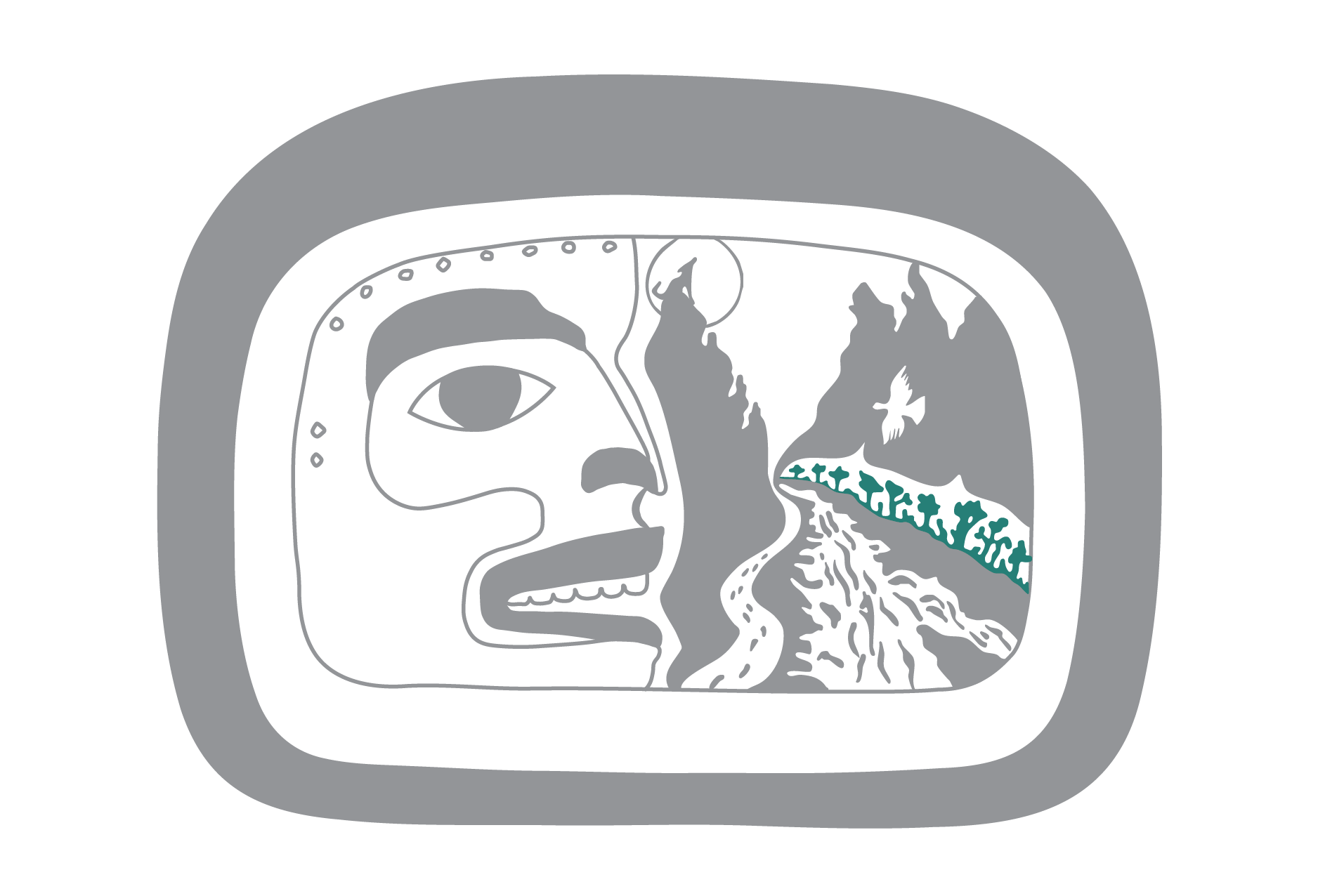
The cottonwood trees on right side of the river are included in the logo as they have significant value to Taku River Tlingit people. Wayne notes: “our people took care of their wounds and pain by making medicine out of cottonwood buds.” The cottonwood trees is seen throughout all of the different bio-regions of the traditional territory spanning from inland boreal forest to coast forest.
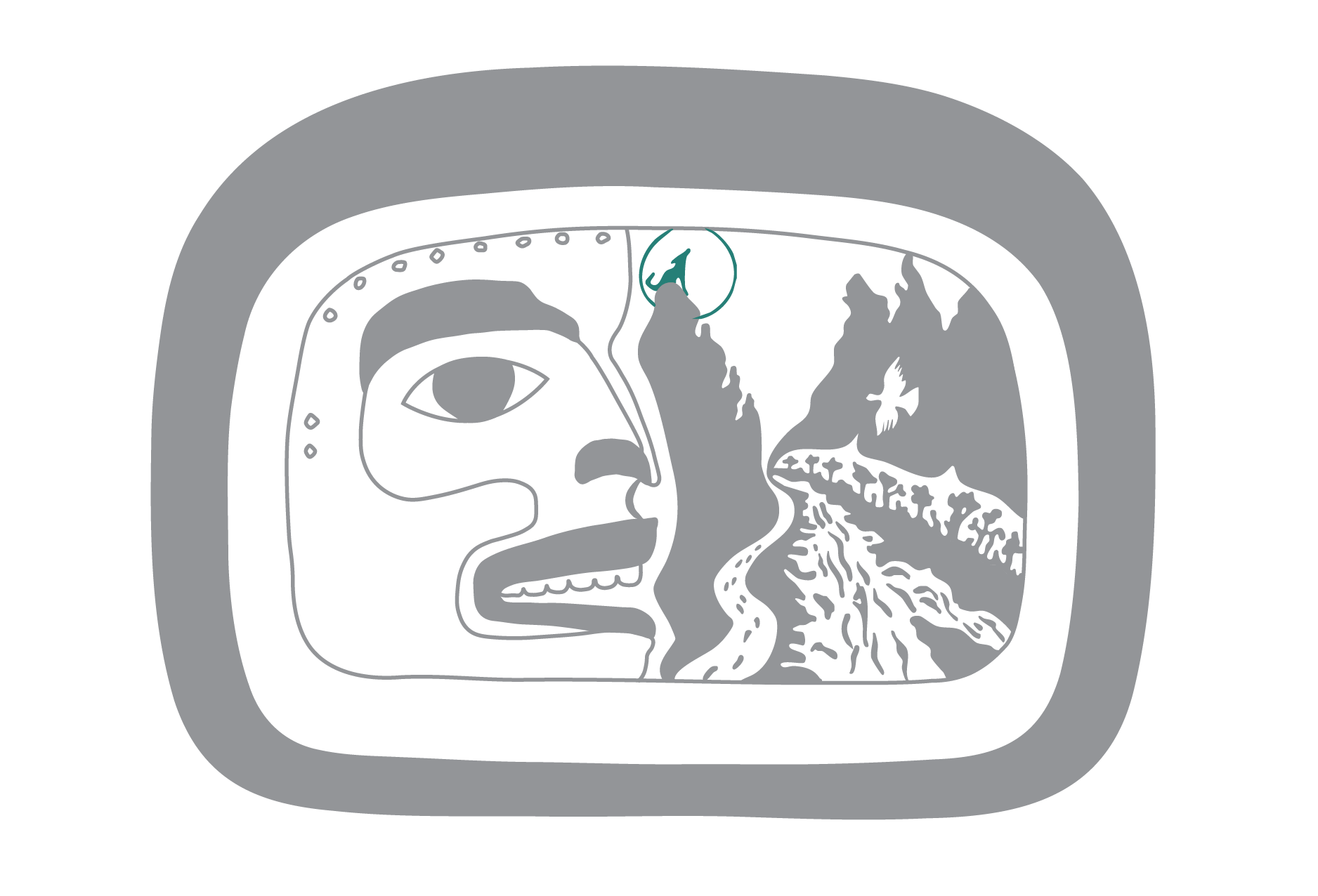
This is a reference to the story by late respected TRTFN Elder Jackie Williams about the wolf’s rock: “That wolf will be a marker that says that this is Yanyeidí territory. This Tlingit land is governed under the Yanyeidí”. This stone marker is called, Yóo gooch áx’ woogaaxi yé (“the wolf’s rock”) or the “Cry Wolf”, and is still there today. Over time Yóo gooch áx’ woogaaxi yé has eroded; it used to have more distinct ears and snout. – Jackie Williams. You can still see this marker today when travelling within the Taku Watershed and it remains an important cultural landmark that affirms the oral traditions of the Taku River Tlingit people!
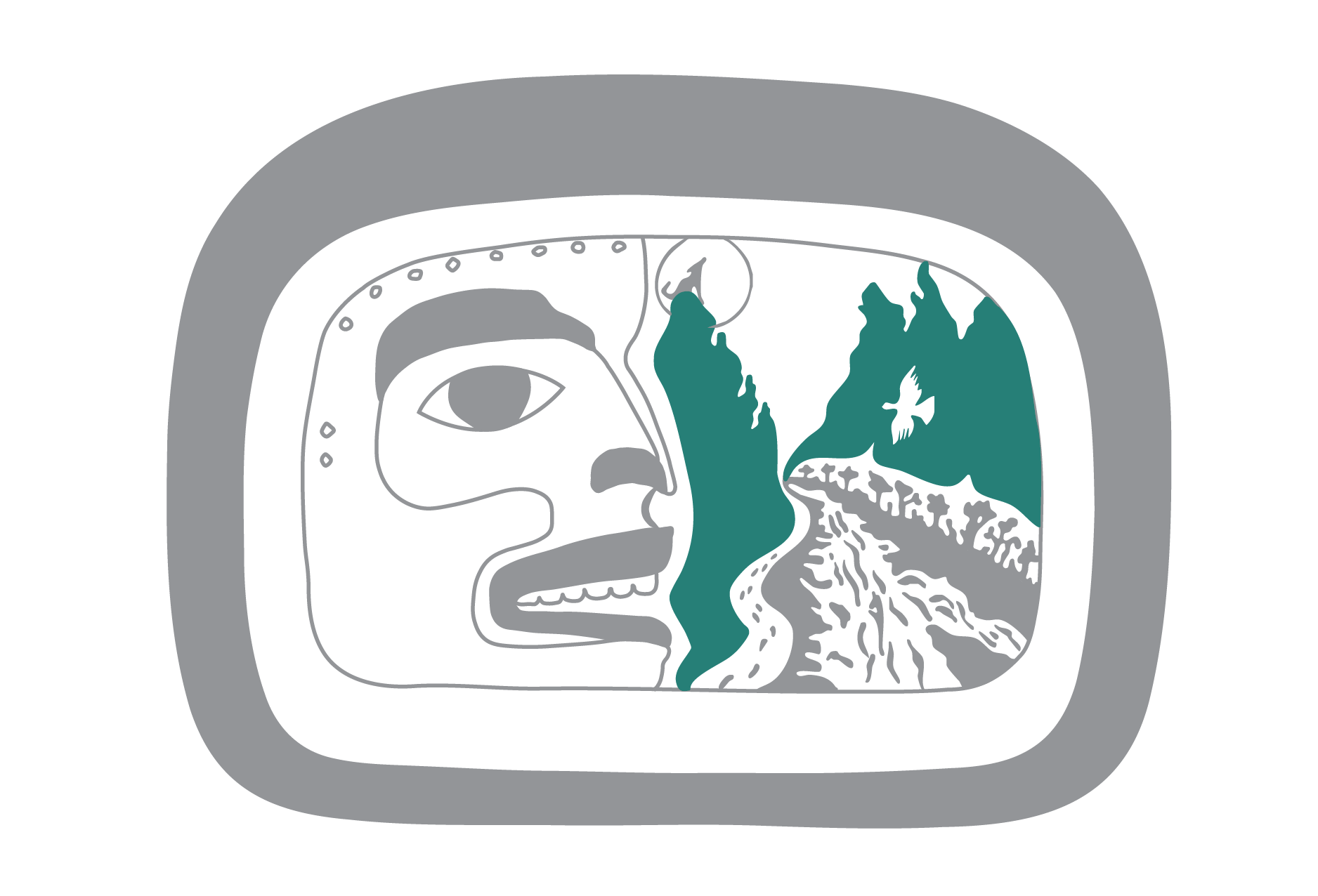
As Wayne notes: “the sharp points of the mountains are also significant because our people have been telling stories about the Taku Watershed mountains forever, like Elizabeth Nyman who talked about the battle of the giants.” This is a reference to The Battle of the Giants (link Nyman & Leer), by late respected TRTFN Elder Elizabeth Nyman. In this story, which Mrs. Nyman told in 1988 in Tlingit, describes a battle that two giants engage in over the Taku River. Eventually, one rips apart the other and throws pieces of his body all over the Taku. The giant’s heart, known as “Heart of the Taku,” exists to this day as an island in the Taku River.
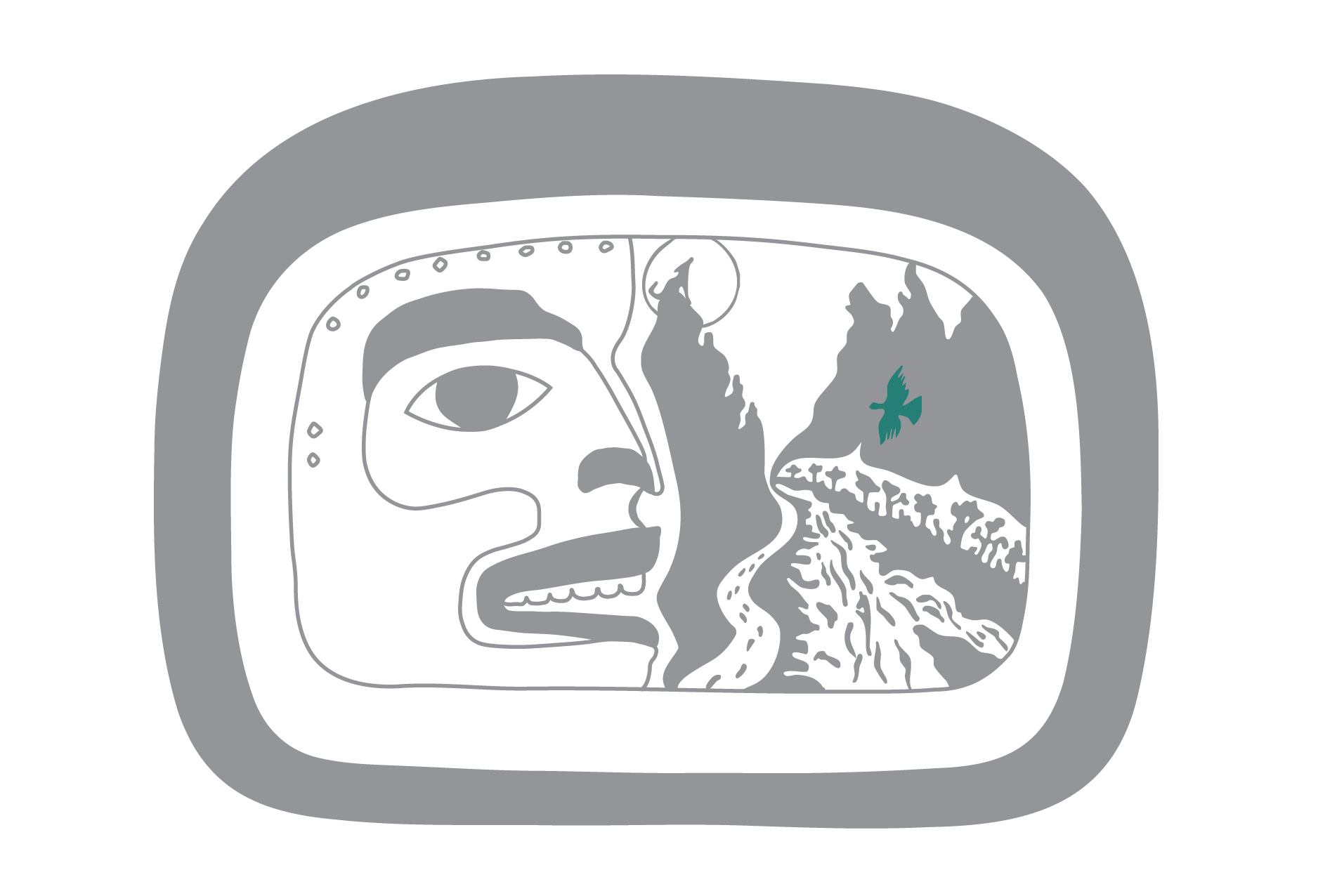
The white raven references the Tlingit creation story: How Raven Stole the Sun, which tells the story about how long-ago Raven brought light into the newly created world and in the process transformed from white to black. For Wayne, the white raven is a way of acknowledging how long Taku River Tlingit people have lived in their traditional territory – since time immemorial. The white raven is also significant because it references logo artist Wayne Carlick’s Tlingit name Yaandekin “raven” and functions as a sort of signature in the design.
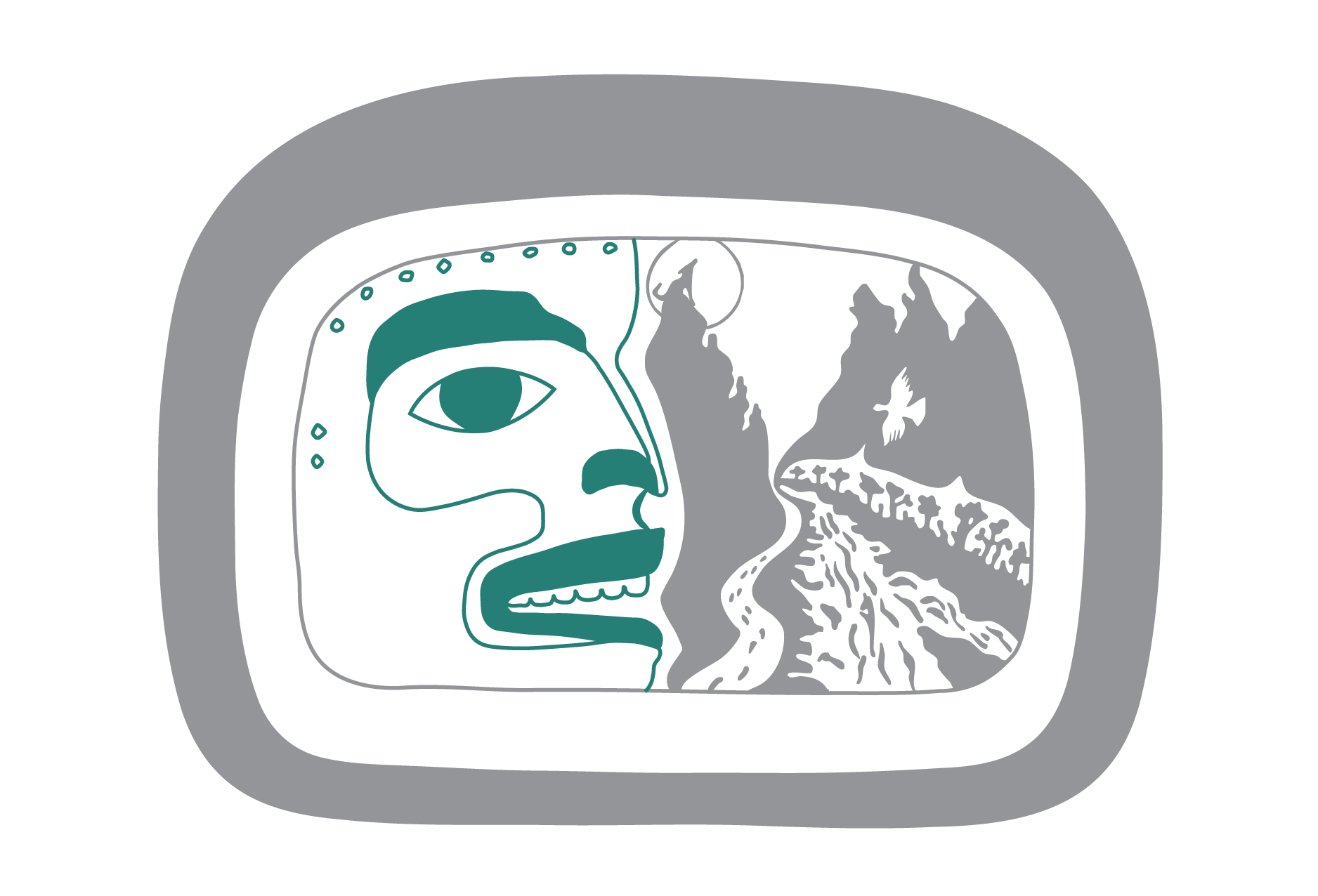
The face in the design is a reference to an Aan Kwéiyi (territorial land marker). Historically, among Tlingit people, groups of clans were organized into Kwaans and Kwaans identified their traditional territory by carving Aan Kwéiyi into trees. Wayne notes that he included it in the logo because “I have put this marker into the trees on the Nakina Trail and all over the place in Tlingit territory.” The face is also used in the traditional masks carved by Tlingit people.
The “mother of designs,” within Northwest Coast art, it acts as a primary structural element (building block) from which other design patterns emanate. Ovoids frequently represent joints (shoulders, hips), eye sockets, or heads of animals.
Frequently Asked Questions
-
TAC is a Canadian registered charity with a goal to ensure that the Traditional Territory of the Taku River Tlingit First Nation remains a landscape where the needs of the Taku River Tlingit Nation people are satisfied in harmony with the continued long term viability of its native plants, fish, wildlife and natural ecosystems. We do this through land-based program delivery, grants that support community-led grassroots change, and by building partnerships and facilitating relationships to achieve our shared purpose of Indigenous-led land protection and cultural preservation.
-
TAC’s creation was a thoughtful process that showed remarkable foresight by TRT citizens and Leadership.The idea of TAC was born out of our relationships with our non-Tlingit conservation partners and alongside the Atlin-Taku Land Use Planning process. The T’akhu  Tlèn Conservancy was created as a tool to give Taku River Tlingit citizens more bargaining power at the negotiation tables with BC. As a non-profit, TAC was able to function as a key stakeholder in representing Tlingit conservation interests and brought with it the promise of long-term core funding to support the implementation of the Taku Wooshtin Agreements.
-
TAC works to further the Tlingit conservation vision through both grant-making and program delivery that supports Taku River Tlingit land protection and stewardship, the revitalization of Tlingit culture, laws, and language, and promotes community well-being and empowerment of a future generation of leaders.
-
TAC supports Taku River Tlingit-led conservation through its programming and funding. Specifically TAC works to support Taku River Tlingit people to reconnect with the land and their culture and to become future land protectors.
-
The TAC Board is made up of 7 members, including 4 Taku River Tlingit members, and 3 non-Indigenous members. TAC is a Board managed organization and through quorum requirements (quorum is made up of two TRT members and one non-Indigenous member) the Taku River Tlingit Board Members effectively control the Conservancy. The TRT Board Members are appointed by a vote of the citizens at the Joint Clan Meeting (JCM) and thereby represent the interests of the Taku River Tlingit citizens. Therefore TAC is accountable to it citizen through the joint clan process.
-
TAC receives funding from a wide range of partners including individuals, governments, foundations, charities, and non-profits. Our donors help us support a range of initiatives that advance Tlingit-led conservation, cultural revitalization, and empower Taku River Tlingit people to continue to be leaders in land protection and stewardship.
-
TAC welcomes general inquiries written “by the community, for the community.” As a funder we are committed to advancing community-led solutions and to building partnerships rooted in trust, collaboration, and a shared purpose.
-
No, the Tlatsini Conservation Fund is not owned by TAC. The Tlatsini Fund does not show up as an asset on our financial statements because it is owned and managed by MakeWay Canada. MakeWay’s legal responsibilities to the Fund are with the TAC Board, as per the Deed of Gift (the legal document that outlines fund governance & distribution).